If you work in Fort Myers, Cape Coral, Estero, Bonita Springs, North Fort Myers, or the surrounding Southwest Florida area, you probably already know which tools you need for your work.
The harder part can be deciding which Milwaukee model is the right one.
Milwaukee makes multiple versions of many tools, and the differences aren’t always as simple as one tool being newer or more expensive than another. Two tools may perform a similar basic function while being designed with different priorities in mind.
One might be smaller and easier to handle. Another might offer more power or additional features. One may be designed for occasional use, while another is built around the demands of frequent professional use.
So when you’re comparing Milwaukee tools, what should you actually look at?
Start With How the Tool Will Be Used
You probably don’t need to be told what a drill, grinder, saw, or multi-tool does.
The more useful question is what you’re asking that particular tool to do.
How often will you use it?
What materials will you be working with?
Will you be using it for short tasks or running it throughout the day?
Will you be working in tight spaces?
Does the job require additional power, speed, capacity, or control?
Those answers can make one Milwaukee model a much better fit than another, even when both tools fall into the same category.
Size and Weight Can Matter More Than You Think
A larger tool isn’t automatically a better tool.
If you’re working overhead, inside cabinets, between framing members, around equipment, or in another confined space, a compact design can make the job easier.
Weight can also become important when you’re using a tool repeatedly throughout the day.
A difference that seems minor when you pick up a tool in a store can become much more noticeable after several hours of use.
On the other hand, there are applications where additional size is worthwhile because it allows the tool to provide capabilities that a compact model cannot.
The right size depends on the work.
Power Isn’t the Only Performance Difference
When comparing tools, it’s easy to focus on one number such as torque, speed, or cutting capacity.
Those specifications can be important, but they don’t tell the entire story.
Depending on the tool, performance can also involve:
- Speed and control
- Cutting or drilling capacity
- Impact energy
- Runtime
- Heat management
- Vibration
- Ergonomics
- Electronic controls
- Available operating modes
The most important specification depends on the application.
For example, maximum power may be extremely important for one job while control, size, or runtime matters more for another.
Brushless and FUEL™ Are More Than Names on the Tool
Milwaukee offers both brushless and FUEL™ tools, and the differences can matter depending on how heavily the tool will be used.
FUEL™ models combine Milwaukee’s higher-performance motor and electronic technologies, and they’re generally positioned toward more demanding professional applications.
That doesn’t mean every professional automatically needs FUEL™.
If a tool is used occasionally or for lighter applications, a less expensive model may provide everything needed.
If the same tool is used heavily every day, the additional performance and capabilities of a higher-end model may be easier to justify.
The question isn’t simply “Is FUEL™ better?”
It’s “What am I getting for the additional cost, and will I actually use it?”
Features Should Solve a Problem
Milwaukee tools can have a long list of features.
The important question is whether those features are useful for your work.
A variable-speed trigger can provide more control. Multiple operating modes can make a tool more versatile. A depth adjustment can help with consistency. Vibration control can matter when a tool is used repeatedly.
Some features may be extremely valuable for one application and almost irrelevant for another.
Instead of counting features, think about which ones will actually make the job easier or give you better control.
The Tool’s Design Can Be Just as Important as Its Specifications
Two tools can have similar specifications and still feel completely different to use.
The balance of the tool, grip, trigger position, visibility, controls, and overall ergonomics can all affect how comfortable it is during repeated use.
This becomes particularly important for professionals who use the same tool every day.
A tool that feels comfortable for five minutes in a store may feel very different after several hours of repeated work.
That’s one reason it’s useful to consider more than the specification sheet when comparing models.
Don’t Overlook the Accessory
Sometimes the tool isn’t the only decision.
The blade, bit, wheel, attachment, or other accessory can have a major effect on how well the tool performs for a particular application.
For example, if you’re choosing a saw, the right blade depends on what you’re cutting.
If you’re drilling, the appropriate bit depends on the material.
If you’re fastening, the fastener and accessory can affect the result.
Knowing which tool you need is only part of getting the right setup.
Newer Doesn’t Always Mean You Need to Upgrade
Milwaukee regularly introduces updated versions of its tools.
A newer model can bring meaningful improvements, but that doesn’t automatically make an older model unsuitable for the work you do.
If your current tool is performing well and has the capabilities you need, replacing it simply because a newer version exists may not make sense.
On the other hand, if a newer model addresses something that has been limiting you—such as runtime, ergonomics, performance, or a specific feature—the upgrade may be worthwhile.
The important question is what you’re gaining.
Price Should Be Considered With the Rest of the Tool
Price is obviously part of the decision, but it shouldn’t be the only thing you compare.
A less expensive tool may be the better choice if it already provides everything you need.
A more expensive model may make sense if you’re going to use its additional performance or features regularly.
For a professional, the cost of a tool can also be considered against how often it will be used.
A tool that gets used every day is a very different purchase from one that comes out a few times a year.
The goal isn’t to spend the least or the most.
It’s to spend your money on the capabilities that actually matter to you.
A Practical Example
Imagine you already know you need a Milwaukee reciprocating saw.
You may now be looking at several models that can all perform the basic job.
Instead of immediately choosing the least expensive or most powerful option, consider what you’re actually going to cut.
Are you doing occasional demolition?
Are you cutting heavier materials regularly?
Will you be using the saw all day?
Is weight important?
Do you need additional control or features?
What blades will you be using?
Those questions can point you toward very different models.
The same approach works with drills, impact drivers, grinders, circular saws, multi-tools, and many other Milwaukee categories.
There Isn’t One “Best” Milwaukee Tool
The best Milwaukee tool isn’t necessarily the newest, most powerful, or most expensive model.
It’s the one whose performance, size, features, ergonomics, and capabilities match the work you’re actually doing.
Once you know the type of tool you need, comparing those differences can help you narrow down the Milwaukee lineup and avoid paying for capabilities you don’t need—or choosing a tool that isn’t up to the job.
Looking for Milwaukee Tools in Southwest Florida?
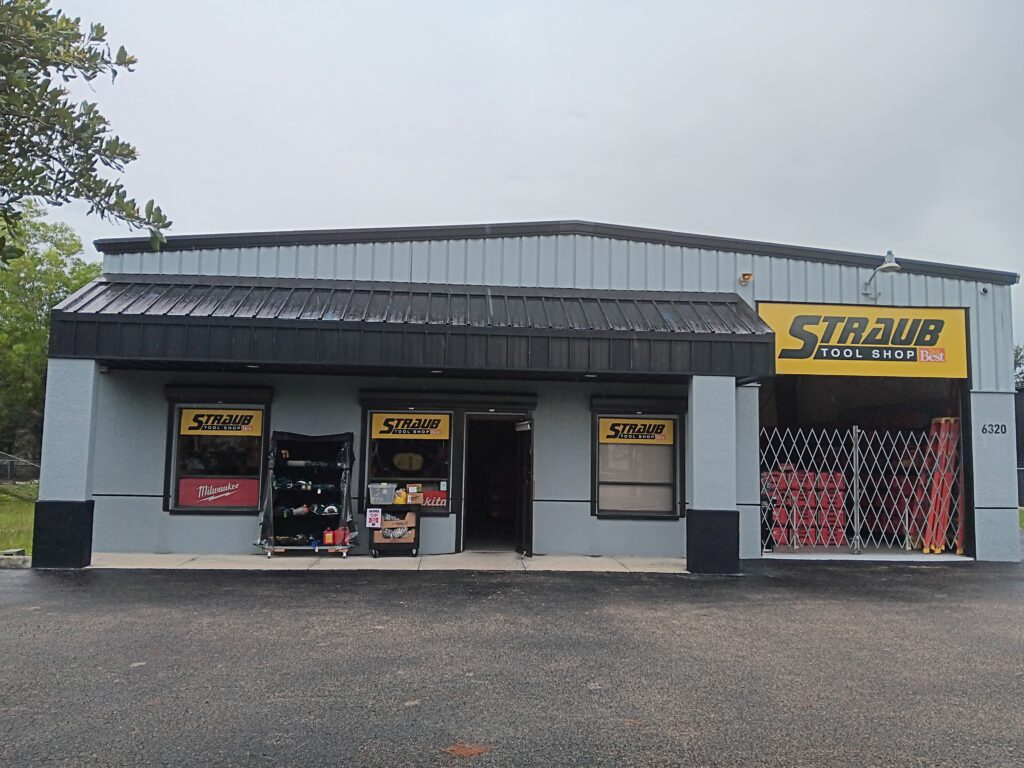
Visit Straub Tool Shop at:
6320 Metro Plantation Rd.
Fort Myers, FL 33966
Our knowledgeable staff can help with specific application questions, such as which blade is best for the material you’re cutting, which accessory fits a particular job, or which Milwaukee model is best suited to how you use the tool.
Sometimes, having someone who knows the products and can talk through the application makes all the difference.